

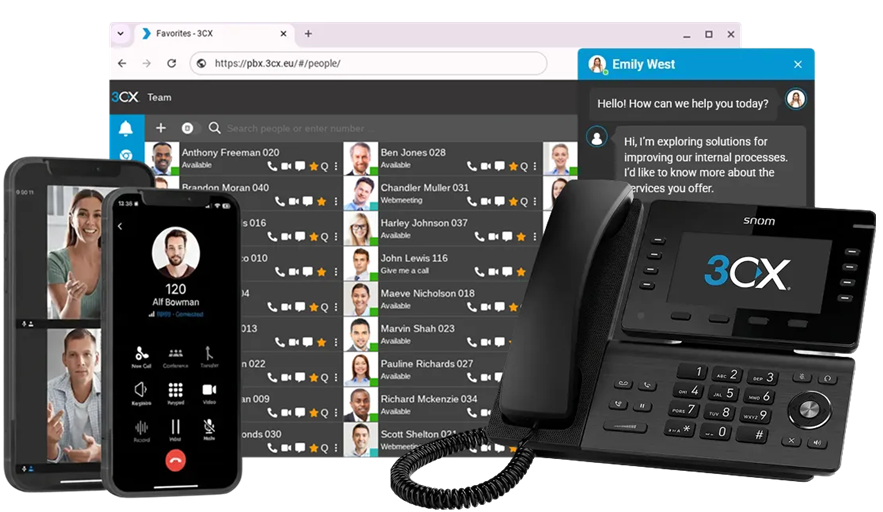
Why traditional phone systems no longer fit modern businesses
Legacy phone systems were designed around physical hardware, desk phones, and static call flows. That model struggles to support modern organisations.
Common limitations include:
- Poor support for remote and hybrid working
- Complex and costly scaling as teams change
- Limited visibility and control over call handling
- Weak resilience during outages or system failures
- Separate platforms for voice, video, and messaging
As expectations change, traditional PBXs become harder to manage and less aligned with how people actually work.
The modern business voice landscape
Voice is no longer a standalone service — it is part of a wider communications ecosystem.
Key changes include:
- Increased use of softphones and mobile apps
- Growing reliance on internet-based calling
- Convergence of voice, video, and messaging
- Higher expectations around call quality and availability
- Pressure to reduce cost and complexity
Modern businesses need voice platforms that are flexible, software-driven, and cloud-ready.
Why basic VoIP deployments often fall short
Moving to VoIP alone does not guarantee a better experience.
Common issues we see include:
- Poor call quality caused by network design or lack of prioritisation
- Systems deployed without resilience or continuity planning
- Over-complex feature sets that go unused
- Limited visibility into call performance and issues
- Voice treated as an isolated service rather than part of the network
Without proper design and support, VoIP can introduce new problems instead of solving old ones.
What effective business telephony should deliver
A modern phone system should provide:
- Consistent, high-quality calling across all users and locations
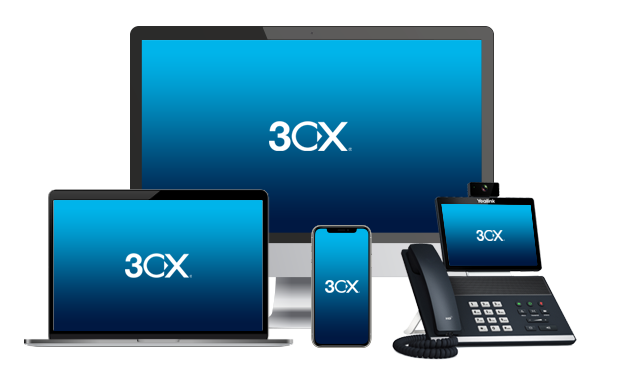
- Flexibility to support desk phones, mobiles, and softphones
- Simple management of users, numbers, and call flows
- Integration with collaboration and cloud platforms
- Built-in resilience and business continuity options
Voice should support productivity and customer experience — not become a support burden.
How BSAS approaches 3CX
BSAS delivers 3CX as a fully designed and supported business service.
We start by understanding:
- How your organisation handles inbound and outbound calls
- Which numbers, queues, and call flows are business-critical
- How users work — office-based, remote, or hybrid
- Network readiness and voice quality requirements
- Expectations around resilience, failover, and recovery
From there, we design a 3CX solution that fits your organisation technically and operationally.
Key capabilities of BSAS 3CX solutions
Depending on your environment and requirements, our 3CX services include:
- 3CX deployment (cloud-hosted or on-premise)
- Call routing, IVRs, queues, hunt groups, and time profiles
- Support for desk phones, softphones, and mobile apps
- SIP trunk integration and number porting
- Voice quality optimisation and traffic prioritisation
- Built-in resilience and failover design
- Ongoing monitoring, support, and system management
These capabilities work together to ensure your phone system is not just installed, but reliable, usable, and maintainable.

Why BSAS is different
Many 3CX deployments focus on features and licensing rather than outcomes.
BSAS differentiates by:
- Designing voice around real call handling and user behaviour
- Treating call quality as a network and design issue, not a handset issue
- Being clear about limitations and dependencies from the outset
- Integrating voice with connectivity, security, and resilience planning
- Supporting the platform long-term, not just at installation
The result is a phone system that works consistently without constant intervention.
How 3CX fits into a wider communications strategy
3CX works best when it is part of a joined-up communications and connectivity design.
When combined with:
- Business broadband or leased lines
- Backup connectivity and automatic failover
- SD-WAN or traffic prioritisation
- Secure firewall and remote access services
- Microsoft 365 and Teams collaboration tools
…it delivers a resilient, flexible communications platform that supports modern working.
Voice becomes an integrated service rather than a standalone system.
Who this service is for
3CX is particularly well suited to organisations that:
- Want to modernise or replace a legacy PBX
- Support remote or hybrid working
- Require flexible call handling and scalability
- Want to reduce telephony cost and complexity
- Need a future-proof platform without vendor lock-in
If voice is business-critical, it needs to be designed properly.
Moving beyond traditional telephony
Modern businesses need phone systems that adapt as they grow and change.
BSAS helps organisations:
- Simplify voice and communications
- Improve call quality and reliability
- Support flexible working without compromise
- Build a voice platform that evolves over time
3CX provides the technology — BSAS ensures it delivers real-world value.